
Heal Together After Domestic Abuse: An Early-Years Recovery Programme
Safe Arbour groups remove the barriers to recovery faced by mothers with young children.
We provide a 12-week, evidence-based programme for mothers and children (0–5) to attend together. Safe Arbour is proven to reduce shame, break isolation and rebuild the mother-child bond after domestic abuse. By intervening during the most vital developmental years, we foster resilience and lasting positive change for both generations.

Supported by
CIC Number 15504017
63% Increase in Self-esteem
—
93% Feel Safer
—
£13 Saved on Average Per £1 Invested
—
63% Increase in Self-esteem — 93% Feel Safer — £13 Saved on Average Per £1 Invested —
Safe Arbour is Already Changing Lives
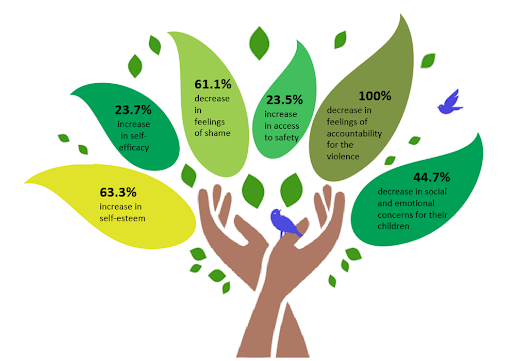
Independent evaluation confirms that Safe Arbour delivers measurable, lasting change. By focusing on the unique needs of children aged 0–5 and their mothers, we are breaking the cycle of trauma.
The programme is vital to families, evidenced by our 84% completion rate.
Six months after the group ended, improvements continued to show:
"Safe Arbour gave me my confidence back and helped me feel close to my child again. I finally feel like we are moving forward."
— Programme Participant
Bridging the Gap in Support:
Practical Barriers: Mothers with children under six face significant hurdles to accessing recovery, such as a lack of childcare, which prevents them from attending therapy.
The Service Void: Most services focus on adults or children separately. Those that do support them together typically only start when the child is 4+, missing the most critical developmental window.
The Long-Term Risk: Without trauma-informed support, the impact of abuse can shape development and well-being for decades, if not generations. The longer families wait for help, the harder the road to recovery becomes.
Safe Arbour Closes This Gap.
We provide dedicated support for mothers and young children together, once they are no longer living with the abuser.
We nurture their inherent strengths and foster hope for the future.
After Leaving Abuse, the Journey isn’t Over
Leaving an abusive partner is a courageous and vital first step—but it is not the end of the story.
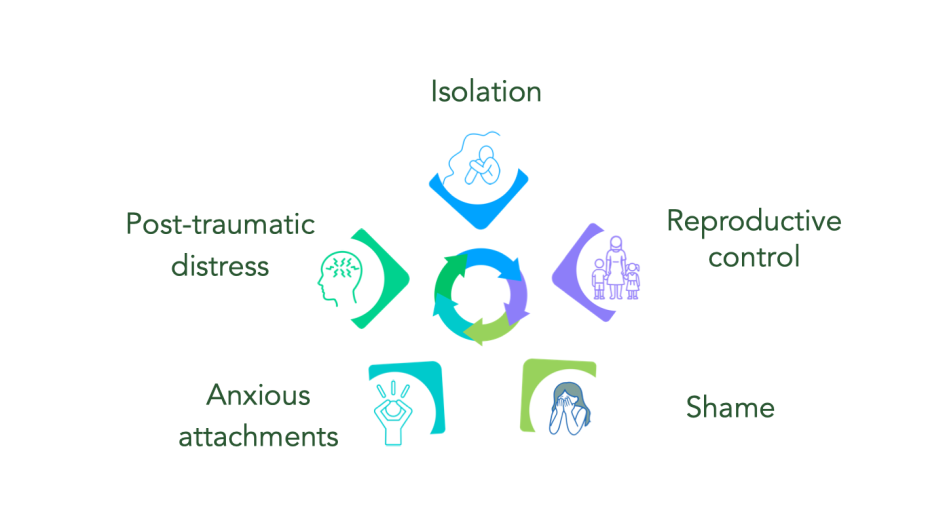
Even after leaving an abusive relationship, many mothers and children continue to feel its impact. Isolation, shame, and fear often reinforce each other, straining the mother-child bond and creating a cycle that is hard to break without the right support.
How We Help: Safe Arbour in Practice
Safe Arbour is a structured, 12-week programme where mothers and young children can heal together.
-
Mothers and Children (Aged 0–5)
We are specifically dedicated to women who’ve exited abusive relationships and have children under six. We focus on the critical early years, where our support has the biggest impact on resilience and a child’s lifelong journey.
-
Consistent Connection & Support
The programme runs for 12 weeks (plus a special group outing during half-term). Mothers and children spend time together and apart in soothing spaces, engaging in activities that reconnect them to their inner strengths—and each other. This rhythm of togetherness and gentle separation helps families build trust, routines, and a sense of safety.
-
Family Time
Mothers and children explore creative, sensory, and playful activities in a calm, supportive environment.
Reclaiming Joy: We help families connect to spontaneity and messiness, elements of childhood often barred by coercive control.
Building Confidence: Staff support these interactions, actively helping mothers recognise and celebrate what they are doing well as parents.
Time Apart
For Mothers: While children play, mothers join a safe, facilitated group to learn more about domestic abuse, how it has affected them and their children, and to explore practical ways to support healing for them and their children.
For Children: They learn to self-soothe, build social skills, and form trusting relationships with safe adults and other children.
The Reunion: Crucially, both mother and child learn that they can be apart and reunite securely, laying foundations for healthy attachment, and building confidence disrupted by trauma.
Get Involved & Find Support
For Funders & Commissioners
Partner With Us to Bring HopeHelp us meet strategic priorities around domestic abuse and early years development. We offer a proven model with measurable outcomes.
Cost-effective delivery model
Measurable impact framework
Scalable
For Funders & Commissioners
Find Healing for Your FamilyIf you are, or support, a mother who has left an abusive relationship, learn about our nurturing and empowering groups. Currently available in the London Borough of Islington only.
Free to access
Childcare included
Confidential, safe environment
For Delivery Partners
Bring Safe Arbour to Your ServiceIf you are a domestic abuse service, children's centre, NHS team, or charity, we can help you integrate Safe Arbour into your support offer. We provide training, support, and co-delivery options.
Complete implementation package
Expert staff training included
Ongoing quality assurance
Clinically Significant, Independently Measured
Our outcomes are tracked using validated clinical scales. The results show profound improvements across maternal well-being and safety perception—improvements that not only sustain but continue to grow six months after the programme ends.
The Long-Term Impact Data:
Maternal self-esteem (scale 0–30)
Start of group: 15.4 (borderline low)
After 12 weeks: 21.4 (healthy)
6 months later: 25.1 (better health)
+63% increase
Growth continued after support ended.
Reduction in shame (scale 0–32, 0 = no shame)
Start of group: 16.4 (high shame)
After 12 weeks: 10.5 (reduced)
6 months later: 6.4 (low shame)
-61% decrease
Two women reported zero shame at 6 months.
Sense of safety and self-blame (accountability scale)
Start of group: 4.9 / 8.0
After 12 weeks: 7.4 / 8.0
6 months later: 7.5 / 8.0
+52% increase
Self-blame reduced by 100%.
Key Clinical Insights
1
The "Sustained Growth" Effect
Crucially, women’s self-esteem scores didn't just improve during the group; they jumped a further 17.4% in the six months following the programme. This proves that Safe Arbour equips mothers with tools they continue to use independently.
2
Eradicating Self-Blame
The evaluation highlighted that the single largest improvement was in Accountability (releasing self-blame).
100% improvement in scores related to feeling responsible for the abuse.
Mothers moved from believing "It is my fault" to understanding the abuse was not their responsibility.
"The programme’s impact on both internal and external shame was not only sustained but further enhanced over time."
— Dr. Rasha Hamid, Independent Evaluator, University of Essex
3
Impact on the Child
Children’s social–emotional development was measured using the [internal link - Ages & Stages Social-Emotional Questionnaire], and the results showed clear and sustained improvement. These are the results from our pilot groups:
Moving to Safety: At the start, 9 children required referral to a specialist service. Six months later, that number dropped to 4.*
Normalising Development: The number of children categorised as "Low to No Risk" nearly doubled (from 5 to 9) by the 6-month follow-up.
Symptom Reduction: 71% of children showed measurable improvement, with symptom scores reducing by an average of 44%.
* Note: The remaining 4 children requiring referral had pre-existing neurodiversity diagnoses.
100% of mothers agreed or strongly agreed that "The Safe Arbour sessions have helped my child a lot."
4
Beyond the Numbers: Results for Families
While the data measures the scale of change, participant interviews revealed the specific themes of healing that occurred within the group.
For Mothers: Empowerment & Release
Greater confidence and sense of self
Stronger, more trusting relationships with their children
Reduced self-blame and shame about the abuse
Feeling validated, understood and less alone
A stronger sense of empowerment and connection to their own inner strengths
"This notable reduction in self-blame is particularly significant given its profound impact on women’s self-perceptions... and represents the largest overall improvement observed among all the variables measured in this study." — Dr. Rasha Hamid, Independent Evaluator, University of Essex
For Children: Connection & Confidence
More opportunities for play and shared mother-child bonding
Being able to separate from mum and reunite safely
Noticeable improvements in communication and emotional regulation
Better social interactions with other children and adults
Increased confidence overall
“The data derived from these diverse sources revealed consistent themes… Themes which emerged in relation to outcomes for the children included increased opportunities for play and mother-child bonding, healthy separation from mothers, and noticeable improvements in communication, emotional regulation, social interactions and overall confidence.” Dr. Rasha Hamid, Independent Evaluator, University of Essex
Help Us Reach More Families
We are ready to expand our reach and help more families find their strength. If you are interested in commissioning, funding, or partnering with Safe Arbour to deliver this vital work in your area, we would love to connect.
Together, we can create safe spaces for healing and growth.